Cross Sections · Letter No. 05
junk drawer or wonder cabinet?
What a 1600s room of wonder can teach the rooms you live in.
- Words
- Shezal
- Read
- 4 min
- Published
- Oct 2026
Cross Sections
From the shade. Letters on shelter, stone, and the rooms we live in.No. 05 · October 2026. The next one comes to the crate first.
Letter No. 05
Open the drawer you never get around to sorting. Dead batteries. A menu from a place that closed. A shell from a beach whose name you've forgotten, a ticket stub, a key to a lock that's long gone.
Most of it could go tomorrow. But there's usually one thing in there you'd never throw out, and if someone asked why, you'd need to sit down to explain it.
01
The room of wonder
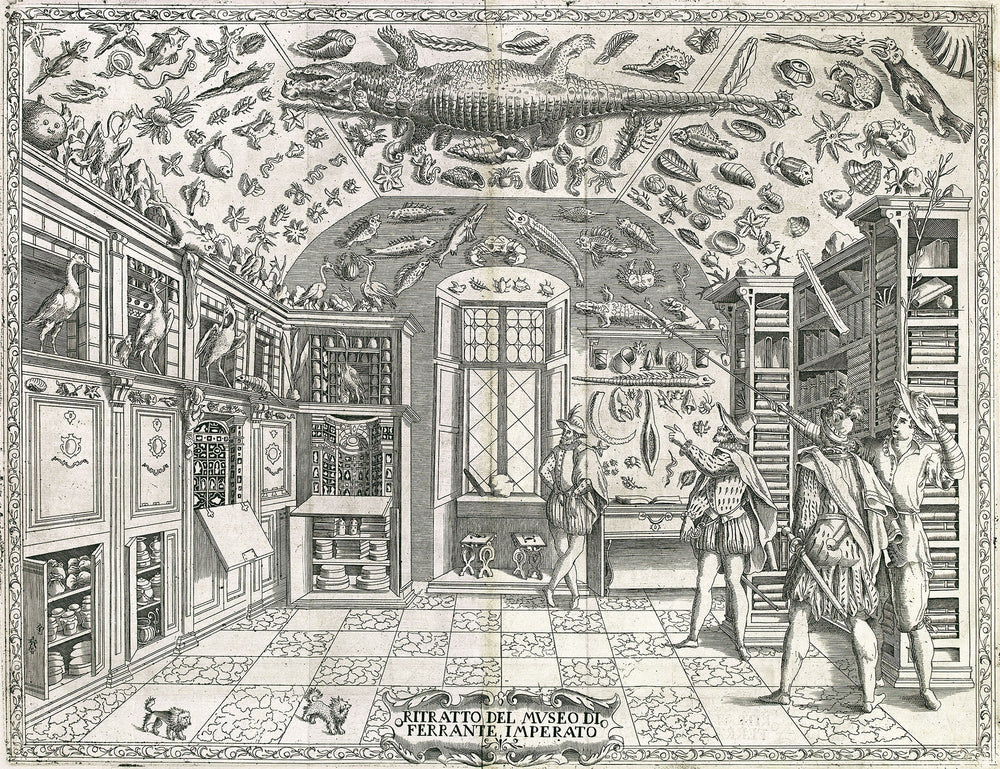
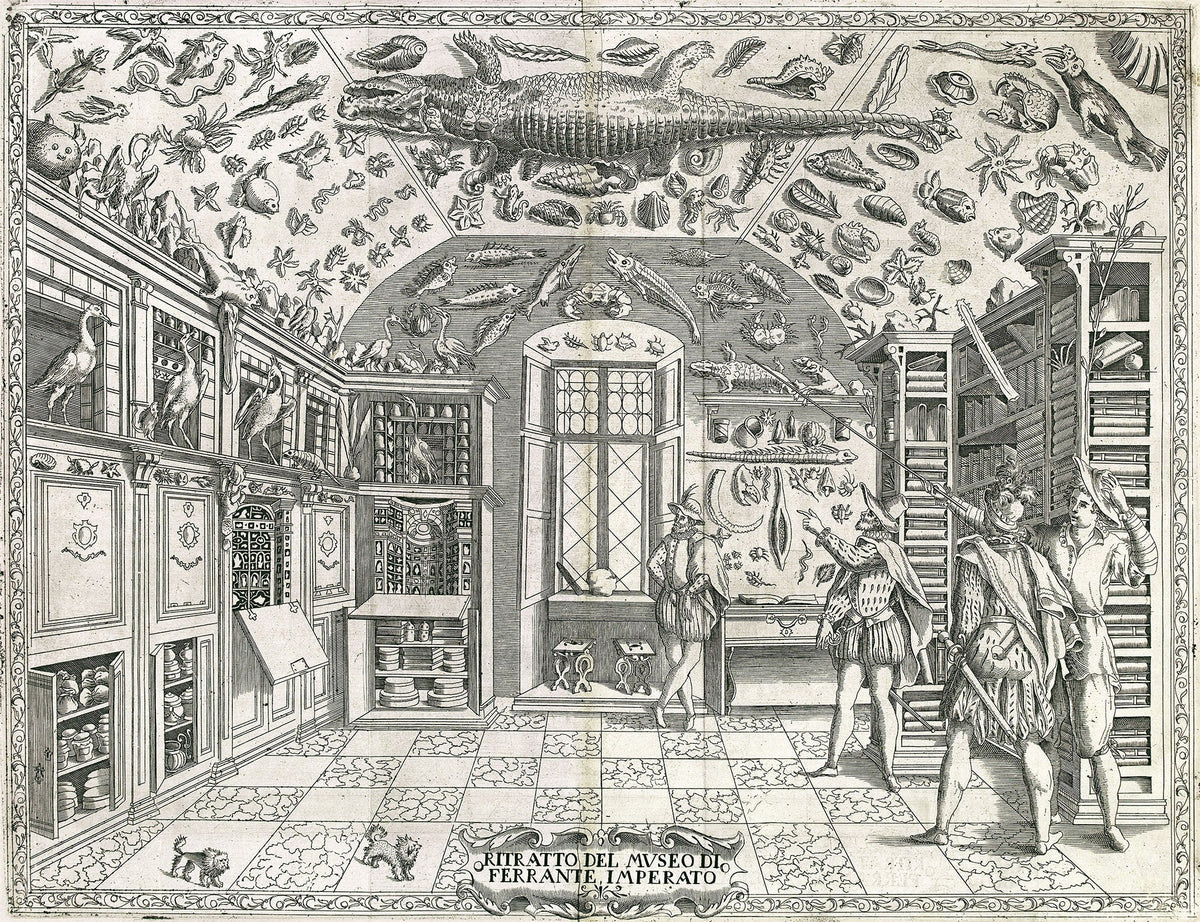
There's that original German idea of the Wunderkammer, the room of wonder, and it's the clearest picture we know of what a maximalist home is for. The cabinet was never a box. In English, a cabinet meant a room long before it meant a piece of furniture. The room was the cabinet, a whole world built to be walked into.
In 1600s Europe, building one was the fashion. One of the most famous belonged to Ole Worm (1588–1654), a Danish physician and professor in Copenhagen. Around 1620 he began filling his with what he brought home from his travels: mostly rocks and living things, plus objects people had made. Fish and birds were suspended overhead, and so was a young polar bear. After he died, his son published the full catalog in 1655 as Museum Wormianum, and the collection went on to become part of the foundation of Denmark's National Museum.
Here at team Saéa, this is what a maximalist environment means for us. We obsess over showing how time and artifacts can be assembled into a space to evoke intentional wonder.

02
A pile isn't a cabinet
Maximalism isn't just being a collector, or vibes across time, smashing it all together in a visual assault of the senses. I mean, it can be that. That's fun. But what does that do for you?
For Worm, the room thought alongside him. With his specimens in reach, he showed that lemmings were rodents, not creatures that formed out of thin air, and he set down some of the first evidence gathered the way scientists gather it now that unicorns weren't real. His room was built to make him think, and it did.
A wonder space does something for the person living in it.
Everything you choose is an ally to that. Forces you assemble to articulate and establish your time zone. Your own sovereign state of play. I mean, have you ever thought of your living room, kitchen, bedroom, or even your garage as a must-experience destination that someone might book their next vacation around? Why not?
03
One room, one job
James Clear makes the case for this in Atomic Habits (2018). We tie our habits to the places they happen, he writes, so when one space hosts everything, the cues blur together and the easiest habit wins. His rule is "one space, one use."
We'd take it a step further. Don't eat in the living room. Don't bathe in the office. Each space does one thing, and that thing can be a mood as much as a task. One room is for thinking. One is for slowing the day down. One is for loud dinners that run past midnight. Once you know what a room is for, you know what belongs in it.
Allies tend to be small and specific:
- The rock you picked up on a walk and never set down.
- The cookbook with someone else's handwriting in the margins.
- The bowl that's moved through four apartments with you.
- The mug a friend threw on a wheel, a little crooked, that you reach for first.
As Shezal puts it, "A home you walk into and can't immediately say, oh, this is art deco, or this is mid-century modern." A room of wonder answers to the person, not to a style.
04 / 05
Three eras on one plank
We work in stone, so Worm's mineral shelves are where you'd have lost us for an afternoon. Whatever else is in your room, the stone got there first, by a few million years.
The sugar quartz in this letter wasn't carved at all. Water carried silica into a hollow in Brazilian ground and it grew outward in small domes until the space ran out; the only cut is a flat base so it can stand. The cobalt bookends are one geode split in two, blue rosettes blooming through white crystal on both faces. The ash-and-ember agate has a single crystal eye opening low and off center, the kind of detail Worm would have drawn for his catalog. And the lidded box is Balochistan onyx, carved by hand, its lid stained rust where minerals moved through the stone as it formed.
You'll find them with the rest of our cut stone and our lidded onyx boxes. Each one is the only one.


05
Your own cabinet
So we take the stance that your shelves and the rooms they sit within are a cabinet you're still filling. It's the opposite of a room that could belong to anyone.
Here's a way in. Pick one room and name the one thing it's for. Then walk it slowly and ask every object the same question: are you helping this room do its job? The things that say yes stay out where you can see them. The things that don't can go live in the drawer. The drawer has room.
You don't need a polar bear. You need a few things on your side.
Name one thing in your room that's an ally. Did it find you, or did you go looking for it?
Tell us below. We read every one.
Yours truly,
Shezal
SAÉA · Earth, unobscured
Replies
0
Pass it on
In the studio
The shade in our own rooms is stone with light in it: vessels, lidded jars and candle holders in onyx, carved by hand.